
Building, structure and infrastructure content in cities is exchanged many ways. When software dominates in market it may be referred as ‘de facto’ standard, but technical guidelines and specifications are decided by its developers. Open standards, on the other hand, are freely available for anyone to use without any legal, technical, or financial restrictions. Those are a set of technical guidelines that ensure consistency and interoperability across different systems used in different domains and disciplines. Through applying open standards in the construction industry different systems and applications can work together, regardless of the manufacturer or supplier, that leads to sustainable and comfortable living environments.
There are benefits recognised that open standards usually promote innovation and competition, leading to new and improved products and services. They also lead to increased and collaboration between industry stakeholders, resulting in cost savings, improved quality, and effective communication and decision-making. To summarise, applying open standards in the construction industry is a positive step for companies to save time and money by reducing the need for custom solutions. There is many widely used open standards, for example Industry Foundation Classes (IFC) for buildings and bridges, LandXML and LandInfra for networks and infrastructures, and CityGML for data in cities.
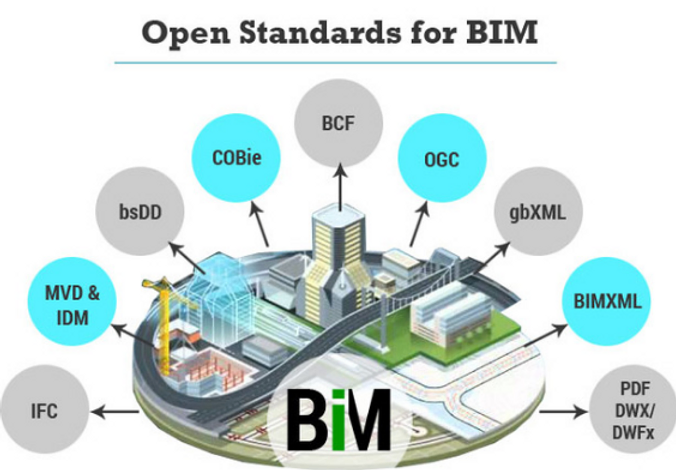
Open Standards for BIM (Source: Bimmodel)
Comentarii ()