Här hittar du mer information om klimatneutralitet, vad det innebär för dig och din stad, samt information om hur NetZeroCities arbetar för att hjälpa dig att nå dit!
Inledning från huvudwebbplatsen
Upptäck de städer som deltar i EU Cities Mission
Publikationer från webbplatsen NetZeroCities
En introduktion till portalen
Innovativa metoder inom ramen för ett tvåårigt program
Vanliga frågor
Städer som tar efter och lär sig av Pilotstädernas arbete
Karta för klimatomställning tar dig med på en resa mot klimatneutralitet och stöttar dig varje steg på vägen i din klimatomställning
Att samordna människor, åtgärder och investeringar för att uppnå klimatneutralitet
Att se på utmaningen ur olika perspektiv och dra lärdom av det förflutna
Sätt att främja förändring genom att använda flera verktyg
Planera, genomföra och följa upp dina åtgärder
Att bygga upp den gemensamma kunskap och de kompetenser som krävs för att snabbt kunna stödja förändringar
Att införa och upprätthålla god praxis
Upptäck det innovativa styrningsverktyget som används av Missionsstäder
NetZeroCities lärandehub erbjuder EU-specifika utbildningsprogram på lokala språk och stöder offentliga förvaltare, forskare, civilsamhällesorganisationer, beslutsfattare, konsulter och förändringsledare.
Det erbjuder systemiska, samarbetsinriktade och peer-to-peer-metoder, tillsammans med praktiska verktyg och evidensbaserade exempel, för att stödja övergången till klimatneutralitet i städer och hjälpa till att navigera i komplex systemisk förändring.
Lär i din egen takt
Gå med i en grupp för att utforska din klimatomställning på fokuserade sätt.
Skapa meningsfulla kontakter i vår gemenskap och dela inlägg i flödet för att hålla kontakten med andra som arbetar för hållbar förändring i sin omgivning!
Ta reda på hur varje land deltar i ett uppdrag och vilka länder som har inrättat nationella plattformar
Se alla städer som är registrerade på NetZeroCities-portalen
Flöde
Upptäck grupper du kan gå med i eller starta en egen
Upptäck evenemang eller skapa ditt eget
Visa alla användare på NetZeroCities-portalen
Chatta med alla användare på NetZeroCities-portalen
Portalen NetZeroCities erbjuder många verktyg som underlättar ditt arbete, både nu och i framtiden.
Utforska alla verktyg via översiktssidan eller dyk in direkt.
Se alla verktyg på ett ögonblick
En datapanel som visar Missionsstädernas framsteg
EU:s initiativ och projekt för klimatneutralitet
Tekniska lösningsportföljer för större genomslagskraft
Utforska praktiska vägar till social innovation
Hitta rätt finansiering för dina projekt
Sökverktyg för tekniska avkarboniseringslösningar (faktablad)
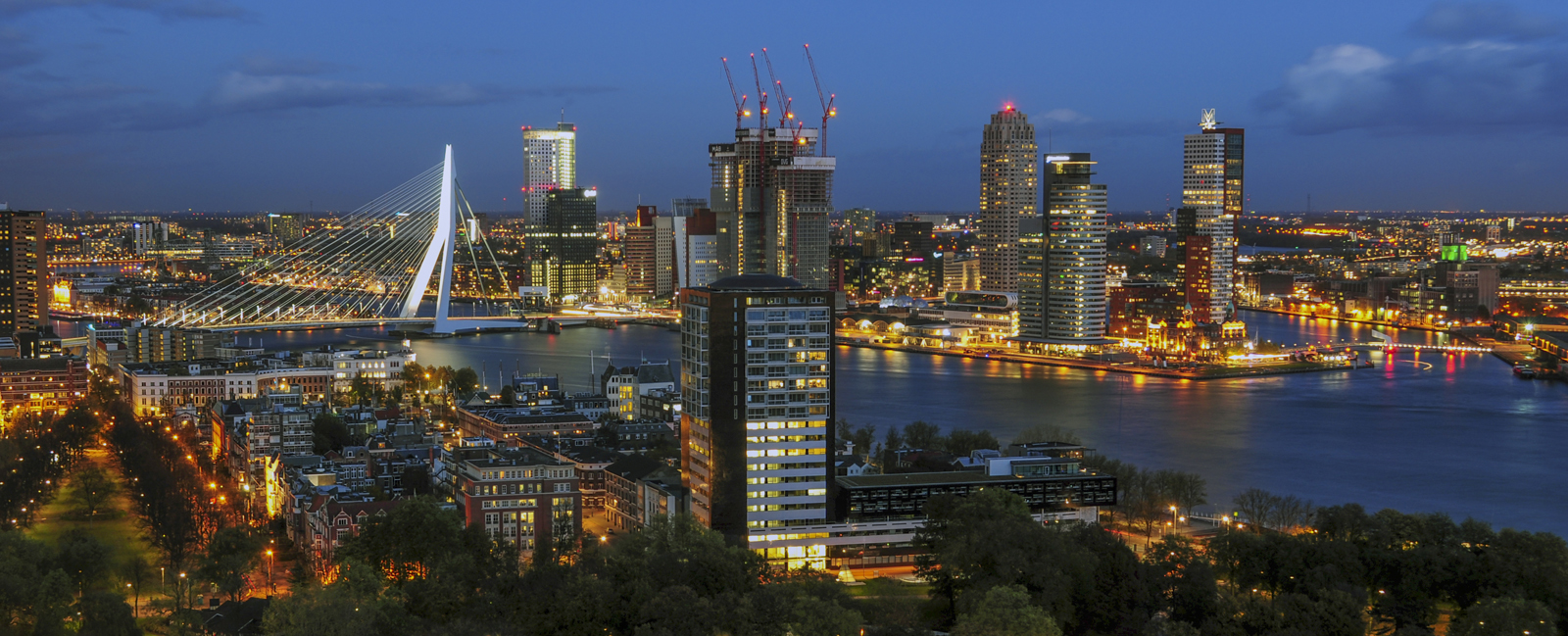
Rotterdam is a city with 600.000 inhabitants. That’s makes us the second largest city in the Netherlands. It is a multi-cultural city with inhabitants from 172 different nationalities. On average we also have the poorest inhabitants compared to the other big cities, which makes an inclusive and affordable energy transition for us of the utmost importance.
Within our municipal boundaries is located the Port of Rotterdam, the biggest port in Europe. The industry and energy sector located there is responsible for roughly 20% of the national CO2- emissions and 80% of the Rotterdam emissions (both scope 1). If we also take in consideration the vast amount goods produced there or passing through, the port plays a large role in emissions produced elsewhere. 13% of all energy consumed in Europe passes through the port and indirect emissions (scope3) amount to almost 3,5 times of the total emissions of the Netherlands.
The transformation of the port towards a clean energy and sustainable resource hub is therefore of strategic importance for the future of our city, the Netherlands and Europe as a whole. Rotterdam is a dense urban area with a negligible amount of farming land. This has several consequences. First, there are but a few areas where large scale wind- or solar farms can be developed. This makes us almost completely dependent, currently and in the future, of the development of sustainable electricity sources beyond our city borders. Next, while there is potential for the development and utilising of local heat sources, for a large part we are dependent on residual heat from industrial processes in the Port of Rotterdam. Emphasizing the strategic importance of this transition for the city area. Third, the extra space required for the energy transition, because of all the extra assets required, causes many issues with other challenges which also demand space, like greening the city, housing, etc.
Inga fler uppdateringar