
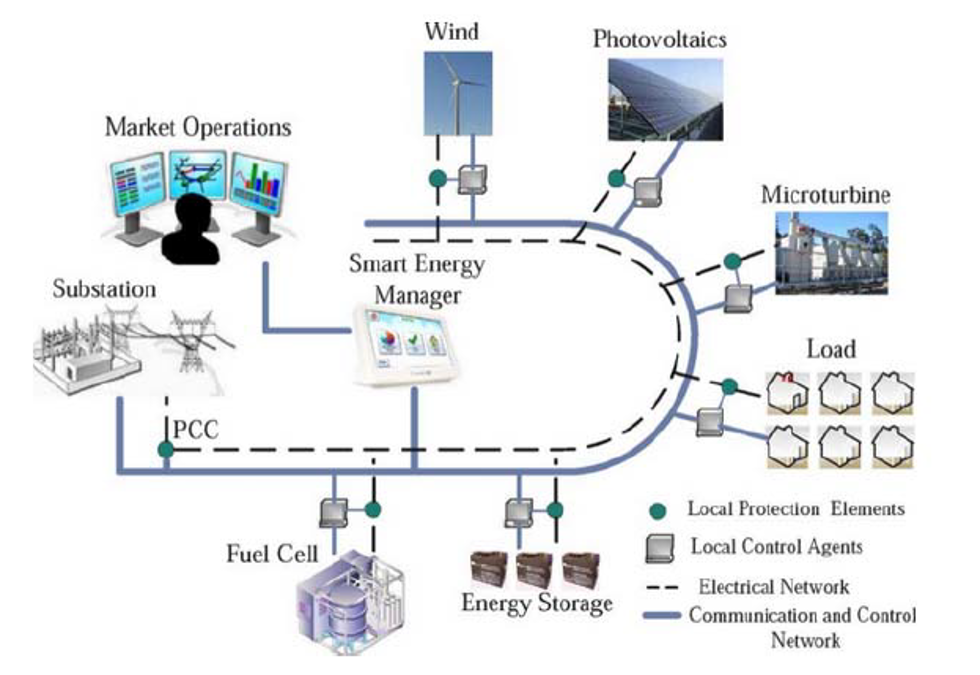
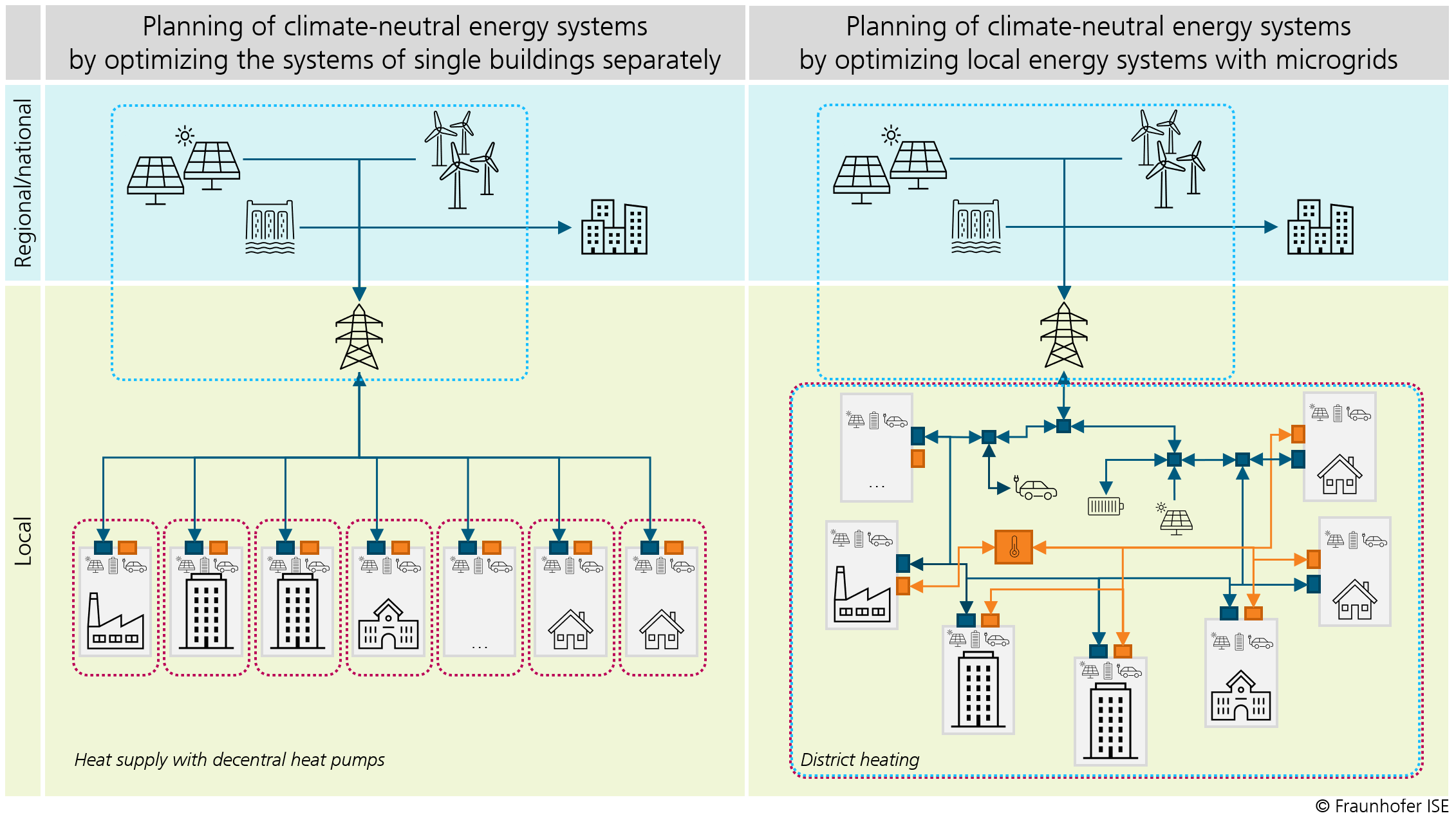
Microgrid is usually understood as sub-area of an electricity distribution network that is organized and operated independently but is connected to the public electricity grid. Several energy producers and consumers are connected to the microgrid, whereby its expansion is usually limited to campus, several buildings, or a neighborhood due to the limitations of the regulatory framework. The microgrid has an intelligent control system and optimizes operation in such a way that the highest possible proportion of self-sufficiency is achieved with local renewable energies and the purchase and feed-in of electricity is designed to be as system-serving as possible for the public grid.
In microgrids, mostly photovoltaic systems and CHP units (e.g. with biogas) are used for power generation combined with stationary batteries. Controllable loads are usually heat pumps that use heat or cold storage as a buffer, as well as an e-mobile charging infrastructure that enables controlled charging and discharging of electric vehicles. Demand-side management can be used to tap further flexibility potential.
The advantages of microgrids are the locally optimised climate-neutral energy supply solution with lower costs for consumers, as grid charges and other levies are avoided. The possibilities of operating a microgrid coupled to the public electricity grid and the economic advantages that can be achieved depending on the regulatory framework conditions, which differ from country to country.
Komentāri ()