
Cycling has recently become more popular (and is being taken more seriously) as a sustainable urban mobility solution. Cycling is at least part of the solution to multiple urban problems. Cycling can reduce the number of serious injuries and traffic deaths, reduce energy consumption, make efficient and equitable use of space, improve personal health, support local economies and improve social inclusion. It also reduces noise pollution and increases the freedom and independence of children (and of their parents).
Cycling has large potential to replace car journeys up to 5-8 km in urban areas. For journeys up to 15 km, for cities with hills and for cities with high temperatures, pedelecs (bicycles that provide electric support while pedalling) are an option. Cycling (whether electrically supported or not) also offers more flexibility than public transport for trip chaining (a practice more common for women than men).
To make cycling a mainstream mobility option, a transformation of the current road system is needed to create a network of cycle routes that is safe and inviting for those who do not yet cycle. This will require the reallocation of space from car facilities (parking, traffic lane) to cycling, the reduction of speeds, the limiting of motorised traffic and the creation of more secure parking facilities for bicycles.
Another area of great potential is the use of cargo bikes (or a bike with a trailer), both for private use to transport children or bulky items or in large-scale use for last-mile urban logistics.
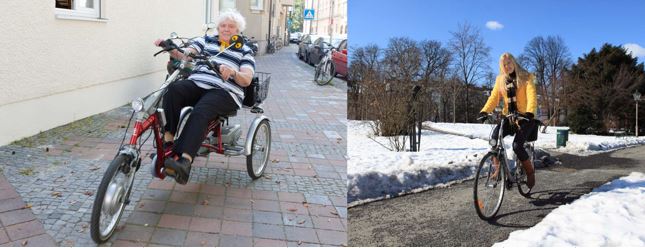
There is also potential to increase social inclusion by enabling more people cycling (older people or those with physical disabilities) and to encourage people to cycle more (e.g. winter cycling).
Kommentit ()