
There is a global need to find and use alternative protein sources in order to improve the sustainability of the food system. While alternative proteins are studied, the easiest shift in the consumers' diet is to exchange meat with fish intake. Nevertheless, this higher consumption must be done avoiding overfishing and improving the current catching processes: fish by-catch and discards account for approx. 30% of the total world capture fisheries, which translates into approximately 30 M of tons of the available resources, not utilized for human food products.
On the other hand, consumers demand for convenient seafood made easily served. These nutrient-rich under-utilized species can be recovered and subsequently used in human food products, increasing their value. Consumers’ preference is also narrowed to certain farmed fish species, i.e. salmonids, whose farming can burden natural waters systems.
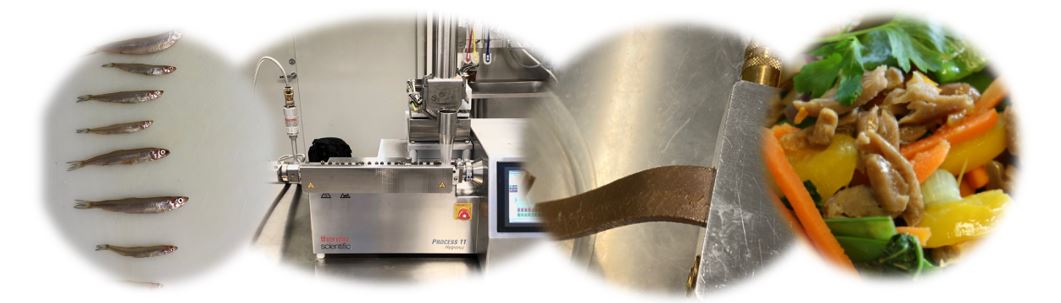
Source: VTT
The solution can be to adopt a production concept (fish farms) that uses diverse whole (ungutted) fish as raw material for convenient palatable seafoods. This innovation leads to (i) valorisation of low value raw material, (ii) simplified logistics by a decentralised production near consumers and (iii) minimum amount of waste and reduction of water consumption and (iv) marketing alternative protein sources, which is the main single factor inhalting global biodiversity loss.
This concept could be replicated in different cities to improve the access to fish without being close to coastal areas and avoiding transport and preservation costs.
Product life cycle stages & Modules (EN15978): Full value chain
Komentarze ()