
Predictive modelling is a crucial element for both real-time management and long-term planning in urban areas.
For example, road sensor data can be used for real-time traffic management in a city, while predictions based on this data can enable decision makers to study long-term effects of interventions in a city. Typically, predictive modelling is performed for one domain in isolation, such as traffic predictions. However, for an integral view on a city it is important to combine such predictions with other domains such as air pollution, noise and behaviour of a population in a city.
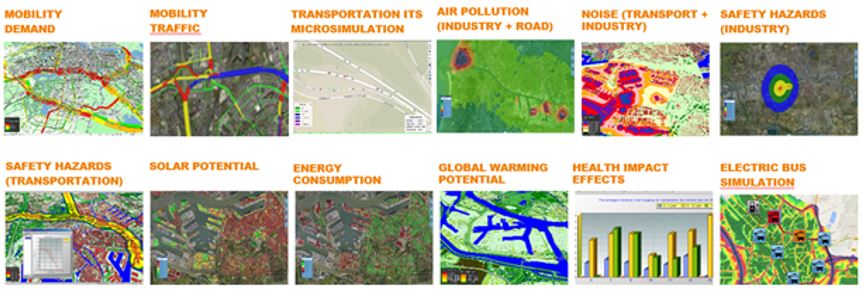
Examples of different ways to simulate and measure impact with Urban Strategy (TNO)
Combining data and simulation models could be part of such a method so as to accelerate and improve spatial planning in the urban environment. Furthermore, prediction models from the field of (explainable) AI can provide stakeholders not only with a prediction, but also with a justification of the underlying mechanisms. As a result, stakeholders can interact with real-time data and predictions simultaneously in several domains.
Коментари ()