
Life Cycle Analysis (LCA) is a type of due diligence that can be performed for materials and products, but also other 'systems': projects, corporations, or cities. LCA can assist in:
- identifying opportunities to improve the environmental performance of the selected system at various points in their life cycle,
- informing decision-makers in industry, government or non-government organizations (e.g. for the purpose of strategic planning, priority setting, product or process design or redesign),
- marketing (e.g. implementing an ecolabelling scheme, making an environmental claim, or producing an environmental product declaration).
A circular LCA addresses the potential environmental impacts (e.g. use of resources and the environmental consequences of releases) throughout a system’s life cycle: from raw material acquisition through production, use, end-of-life treatment, (Modules A to C of standard EN 15978) and beyond it, to recycling/ refurbishing/ remanufacturing, etc.
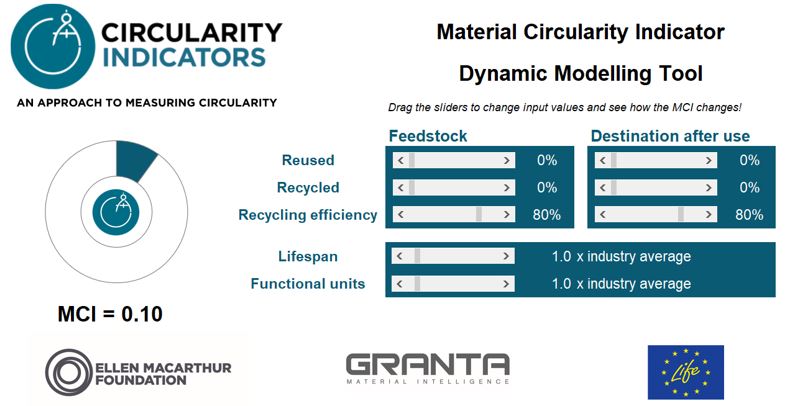
This is part of the Circularity Indicators Project by the Ellen MacArthur Foundation and Granta Design Ltd (co-founded by the EU's Life programme)
Circular LCA also includes circularity indicators, such as recycling and reusing rates. Circularity indicators are beneficial to mitigate risks from material price volatility and material supply. There is as yet no standard methodology for circular LCA. The European Commission is leading efforts in this direction.
Коментари ()