
Thanks to their multifunctionality, NBS can address several urban challenges, in particular related to climate change, urban resilience and human health and well-being. For this reason, NBS require proactive policy intervention to be mainstreamed and integrated into urban policies, planning processes, and decision-making mechanisms.
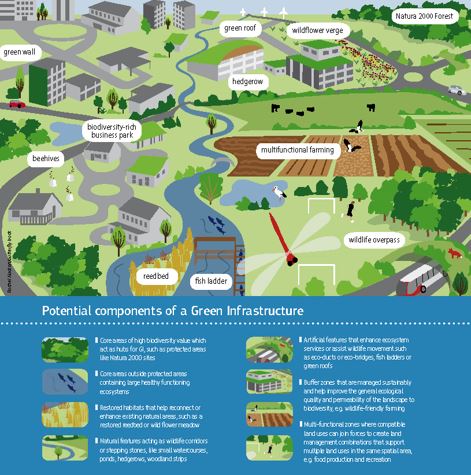
Source: EEA (European Environment Agency)
Designing NBS and Green Infrastructure plans and strategies can support other policy documents and have an impact in terms of spatial development, environmental protection, noise level reduction, low carbon economy plans.
In terms of governance, the nature of NBS require large collaboration partnerships and participation. For instance, several cities are experimenting co-creation and co-design processes established in Living Labs, together with local communities and stakeholders. Nevertheless, the success of NBS as a concept in supporting urban transformation will largely depend on the extent to which NBS are embedded in urban planning and development processes. In fact, there is significant potential to use NBS as a “tool” to achieve objectives set in existing or future strategies (e.g. sustainable urban mobility plans, resilience strategies, land use plans, housing licencing policies).
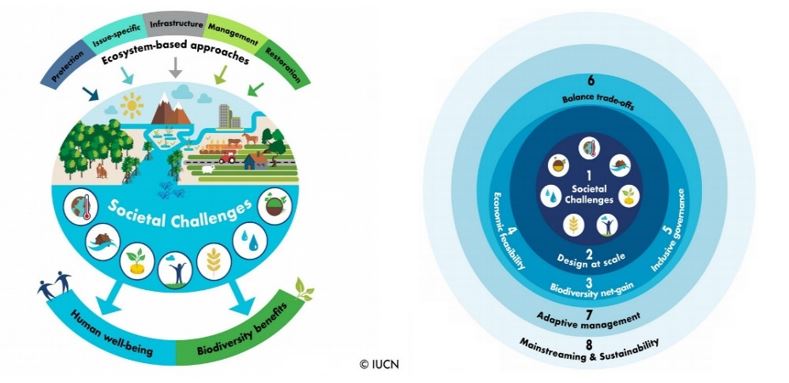
Source: IUCN (International Union for Conservation of Nature)
Comments ()