
Urban vehicle access regulations (UVARs) are means to reduce the number of vehicles entering a given geographical area. These can include regulatory measures (e.g. low-emission zone), financial measures (e.g. congestion charge) or spatial measures (e.g. creation of a superblock or reallocation of road space to create a pedestrian zone).
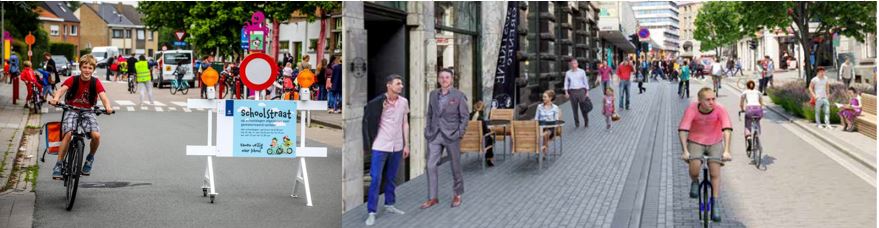
UVAR measures can be put in place for reasons such as: to create more liveable space, to encourage more walking or cycling, to address delivery issues such as congestion or kerb space access, to reduce air pollutant emissions (e.g. PM, NOx) or greenhouse gas emissions (e.g. CO2), to reduce speed and/or noise, to reduce motorised traffic levels, through traffic, congestion and/or injuries.
These "stick" measures (as opposed to "carrot" measures) put restrictions on vehicle access to given areas, while maintaining access for people and for goods. As such, it is important to work closely with citizens and stakeholders to ensure they understand the purpose of the restrictions and that no equity issues arise.
Komentáře ()