
The potential of smart technologies in the building sector was emphasised in the 2018 revision of the European Energy Performance of Buildings Directive (EPBD) and the Smart Readiness Indicator (SRI) was introduced, followed by two legal acts in 2020 which establish the SRI as an official EU instrument. The European directive doesn't impose the deployment of the SRI on each Member State, it's for the moment optional, but Europe plans to further strengthen the SRI to ensure its generalization in large new buildings.
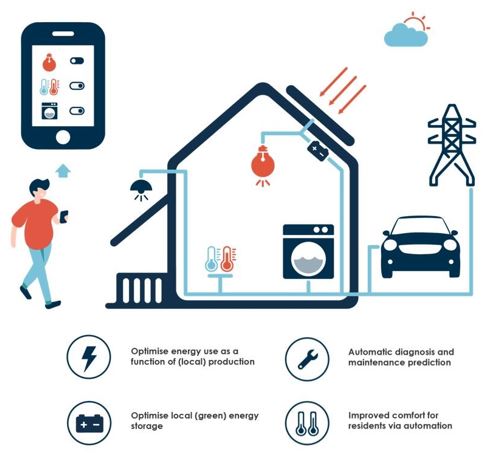
The SRI is a common EU scheme for rating the smart readiness of buildings. The SRI assesses how smart a building is in terms of:
- responding to the needs of the occupant (e.g. health, comfort, well-being, etc.);
- using energy efficient control strategies;
- interacting with energy grids (energy flexibility / demand response and system integration).
Why is it relevant:
- Using smart technologies in buildings can be a cost-effective way to assist in creating healthier and more comfortable buildings with lower energy use and carbon emissions. For instance:
- Digital technologies such as smart thermostats and lighting control can pay back within 2 years.
- Smart technologies, such as automated sun shading control or ventilation control based on air-quality sensors, can also improve health, well-being and comfort.
- Intelligent scheduling of energy consumption (white goods, electric vehicles, etc.) can result in significant energy savings, and at the same time it contributes to grid balancing.
- The SRI provides a common language for building stakeholders (owners, designers, solution providers, policy actors, etc.) to discuss how to make buildings smarter, and what benefits this will bring.
Komentari ()