
Collectively, buildings in the EU are responsible for 40% of energy consumption and 36% of greenhouse gas (GHG) emissions, which mainly stem from the construction, usage, renovation and demolition. Approximately three quarters of building stock is energy inefficient. (European Commission, 2020).
"Financing" EE investments is a key barrier towards wide scale adoption of EE solutions for both new and existing buildings. "Loan financing" can be a key instrument towards enabling such investments across public, private and community buildings. Loan financing can be offered by vendors, equipment manufacturers, energy services companies or third-parties such as banks or financial institutions.
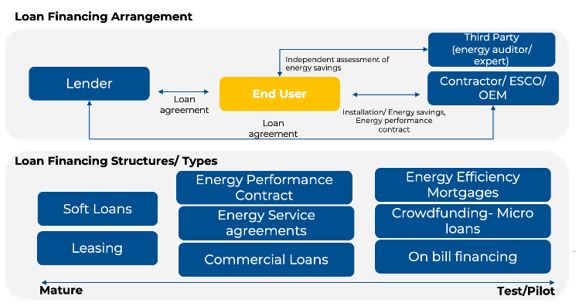
The type and structure of loan may vary depending on the potential savings achieved from the investments and the profile of the borrower. While structured development loans can be an effective tool for financing public buildings, commercial loans at competitive prices could enable financing for commercial buildings, and soft loans can enable adoption of EE measures for community buildings.
Similarly underwriting energy savings when purchasing or refinancing a property, allows for the financing of efficiency upgrades with mortgage capital for new buildings. Hence, access to loan financing at competitive rates can be a key enabler of adopting EE measures in the built environment at scale and progressing towards Net Zero Energy Buildings, thereby reducing emissions from the built environment and improving energy access.
Komentāri ()