
Geothermal energy is renewable heat produced from rocks and fluids in the subsurface. The temperature of the produced hot water increases with subsurface depth. In the Netherlands for example, at about 1 km subsurface depth the water temperature is about 35 - 50°C and at 2 km depth temperatures are 60 - 80°C. This heat can be used for example to heat greenhouses and houses connected to a heat network. Ultra-deep geothermal energy from ~4 km depth could produce >120°C heat, which can be used for electricity or industrial processes. The possibility to produce geothermal heat depends on many subsurface factors which can vary locally.
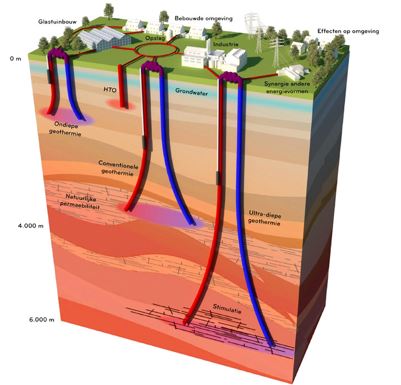
Shallow, deep and ultra-deep geothermal energy in the subsurface. Source: RoyalHaskoningDHV, link.
Geothermal energy has many benefits: it is renewable, sustainable, almost CO2-emission free, available 24 hours a day, and can therefore serve as baseload heat supply in high- and low temperature heat networks. Geothermal energy is independent of oil price fluctuations, it will reduce the dependence of energy imports from other countries and the installations do have a comparably low spatial footprint.
Comments ()