Here you will find more information about climate-neutraility, what it means for you and your city, as well as information about how NetZeroCities works to help get you there!
Introduction from main website
Discover the cities involved in the EU Cities Mission
Publications from the NetZeroCities website
An introduction to the Portal
Innovative approaches over a two-year programme
Frequently Asked Questions
Cities replicating and learning from the work of Pilot Cities
The Climate Transition Map offers you a journey to climate neutrality, supporting you every step of the way with your climate transition
Aligning people, actions and investments to achieve climate neutrality
Understanding the challenge from different perspectives and learning from the past
Ways to support change using multiple levers
Planning, implementing and monitoring your actions
Building the shared knowledge and capabilities necessary to support change at speed
Embedding and maintaining good practice
Explore our Knowledge Repository to learn from technical resources, case studies and approaches to climate action that you can use to support your work.
You can also contribute your own resources and publications to strengthen knowledge sharing for all.
Climate Neutrality Resource Search Engine
Financial approaches for climate neutrality
People based solutions
Key focus areas of NetZeroCities at a glance
Indicators to evaluate the effectiveness of urban sustainability initiatives
Coordinated interventions across existing systems
Citizen and urban stakeholder participation
Policy and EU climate neutrality projects
Define and implement advanced and innovative solutions supported by technology
Design Your City’s Net Zero Strategy: Online Planning Lab
Discover the innovative governance instrument used by Mission Cities
Join a group to explore your climate transition in focused ways.
Make meaningful connections across our community, share posts on the social feed to keep connected with others making sustainable change in their community!
See all countries registered on the NetZeroCities Portal
See all cities registered on the NetZeroCities Portal
Social feed
Explore groups to join or start your own
Explore events or create your own
See all users on the NetZeroCities Portal
Chat with all users on the NetZEroCities Portal
The NetZeroCities Portal hosts many tools to support your work, now and into the future.
Explore all tools through the overview page or dive straight in.
Explore all tools at a glance
Data dashboard exploring Mission Cities' progress
EU climate neutrality initiatives and projects
Technical solution portfolios for greater impact
Explore Social Innovation Actionable Pathways
Find the right funding for your projects
Technical decarbonisation solution (factsheet) finder
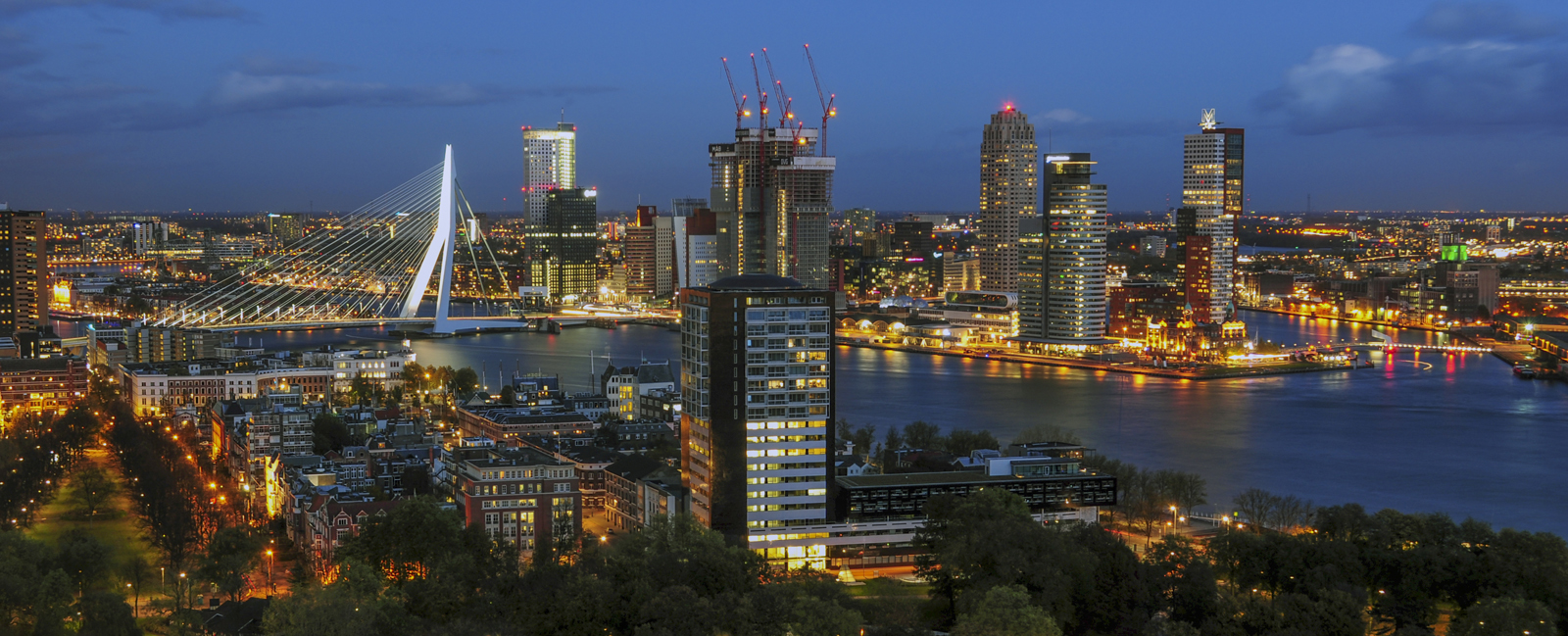
Rotterdam is a city with 600.000 inhabitants. That’s makes us the second largest city in the Netherlands. It is a multi-cultural city with inhabitants from 172 different nationalities. On average we also have the poorest inhabitants compared to the other big cities, which makes an inclusive and affordable energy transition for us of the utmost importance.
Within our municipal boundaries is located the Port of Rotterdam, the biggest port in Europe. The industry and energy sector located there is responsible for roughly 20% of the national CO2- emissions and 80% of the Rotterdam emissions (both scope 1). If we also take in consideration the vast amount goods produced there or passing through, the port plays a large role in emissions produced elsewhere. 13% of all energy consumed in Europe passes through the port and indirect emissions (scope3) amount to almost 3,5 times of the total emissions of the Netherlands.
The transformation of the port towards a clean energy and sustainable resource hub is therefore of strategic importance for the future of our city, the Netherlands and Europe as a whole. Rotterdam is a dense urban area with a negligible amount of farming land. This has several consequences. First, there are but a few areas where large scale wind- or solar farms can be developed. This makes us almost completely dependent, currently and in the future, of the development of sustainable electricity sources beyond our city borders. Next, while there is potential for the development and utilising of local heat sources, for a large part we are dependent on residual heat from industrial processes in the Port of Rotterdam. Emphasizing the strategic importance of this transition for the city area. Third, the extra space required for the energy transition, because of all the extra assets required, causes many issues with other challenges which also demand space, like greening the city, housing, etc.
No more posts