
Here you will find more information about climate-neutraility, what it means for you and your city, as well as information about how NetZeroCities works to help get you there!
Introduction from main website
Discover the cities involved in the EU Cities Mission
Publications from the NetZeroCities website
An introduction to the Portal
Innovative approaches over a two-year programme
Frequently Asked Questions
Cities replicating and learning from the work of Pilot Cities
The Climate City Contract is the Mission´s core delivery instrument. Here you can find everything you need to develop and submit your own: practical guidance, templates, examples and case studies.
Learn about Climate City Contracts
Explore all Climate City Contracts developed by Mission and Mission-minded cities
Discover the Climate Transition Map
Climate City Contract Templates and Guidance
The NetZeroCities Learning Hub offers EU-specific learning programmes in local languages, supporting public administrators, researchers, civic organisations, policymakers, consultants and changemakers.
It provides systemic, peer-to-peer and collaborative approaches, alongside practical tools and evidence-based cases, to support the transition to urban climate neutrality and help navigate complex systemic change.
Learn at your own pace
Join a group to explore your climate transition in focused ways.
Make meaningful connections across our community, share posts on the social feed to keep connected with others making sustainable change in their community!
Learn how each country engages in a Mission and which have established National Platforms
See all cities registered on the NetZeroCities Portal
Social feed
Explore groups to join or start your own
Explore events or create your own
See all users on the NetZeroCities Portal
Chat with all users on the NetZeroCities Portal
The NetZeroCities Portal hosts many tools to support your work, now and into the future.
Explore all tools through the overview page or dive straight in.
Explore all tools at a glance
Data dashboard exploring Mission Cities’ progress
EU climate neutrality initiatives and projects
Technical solution portfolios for greater impact
Explore Social Innovation Actionable Pathways
Find the right funding for your projects
Technical decarbonisation solution (factsheet) finder
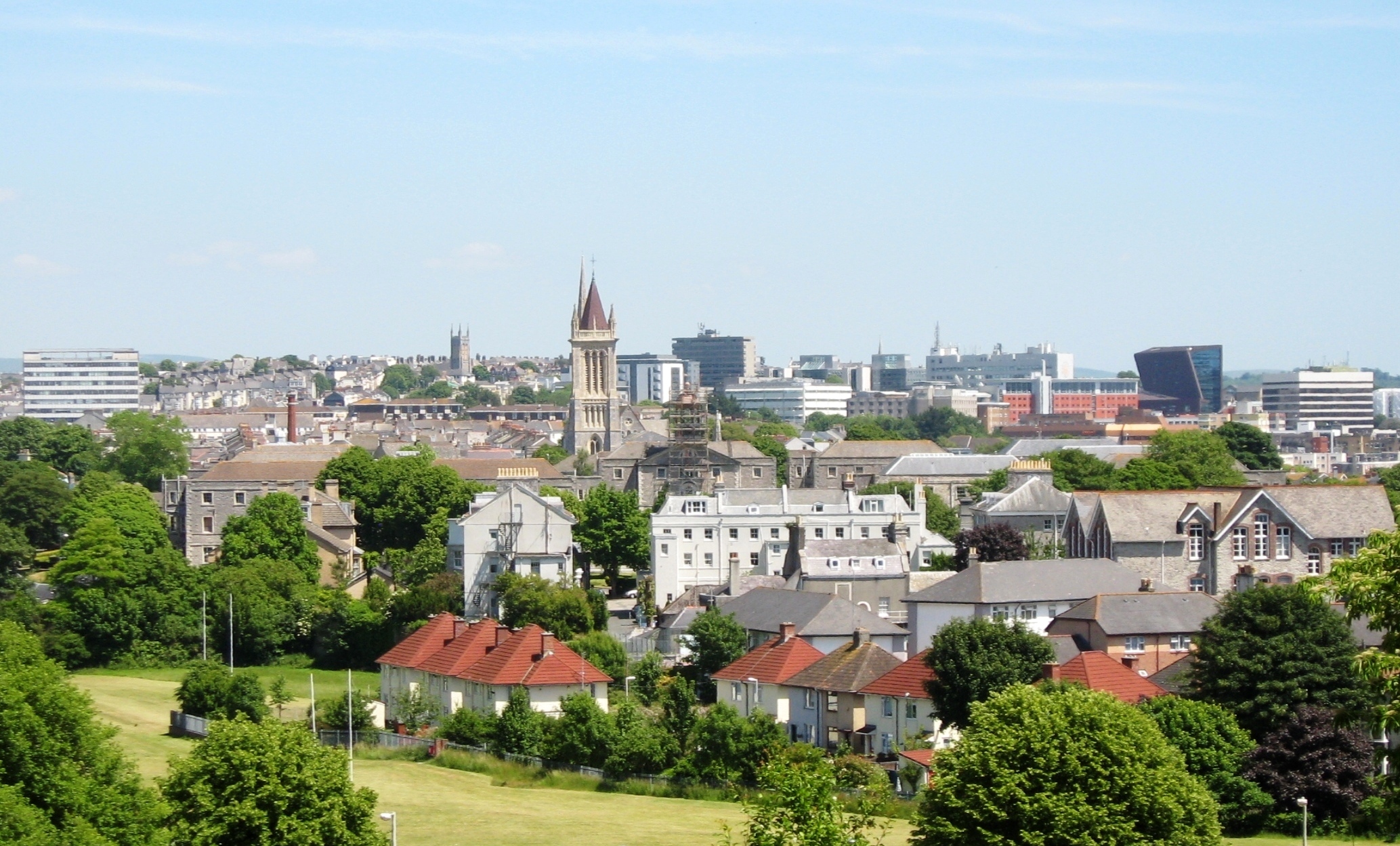
This default description comes from wikipedia
Plymouth ( PLIH-mth) is a port city and unitary authority in Devon, South West England. It is located on Devon's south coast between the rivers Plym and Tamar, about 36 miles (58 km) southwest of Exeter and 193 miles (311 km) southwest of London. It is the most populous city in Devon.Plymouth's history extends back to the Bronze Age, evolving from a trading post at Mount Batten into the thriving market town of Sutton, which was formally re-named as Plymouth in 1439 when it was made a borough. The settlement has played a significant role in English history, notably in 1588 when an English fleet based here defeated the Spanish Armada, and in 1620 as the departure point for the Pilgrim Fathers to the New World. During the English Civil War, the town was held by the Parliamentarians and was besieged between 1642 and 1646. In 1690 a dockyard was established on the River Tamar for the Royal Navy and Plymouth grew as a commercial shipping port throughout the Industrial Revolution.After absorbing nearby settlements in 1914, the borough was awarded city status in 1928. During World War II, Plymouth suffered extensive damage in the Plymouth Blitz, leading to post-war rebuilding that significantly shaped its modern appearance. A further expansion of its boundaries in 1967 contributed to its current status as the 30th-most populous built-up area in the UK and the second-largest city in the South West after Bristol, with a population in 2022 of 266,862.
No more updates