
Here you will find more information about climate-neutraility, what it means for you and your city, as well as information about how NetZeroCities works to help get you there!
Introduction from main website
Discover the cities involved in the EU Cities Mission
Publications from the NetZeroCities website
An introduction to the Portal
Innovative approaches over a two-year programme
Frequently Asked Questions
Cities replicating and learning from the work of Pilot Cities
The Climate Transition Map offers you a journey to climate neutrality, supporting you every step of the way with your climate transition
Aligning people, actions and investments to achieve climate neutrality
Understanding the challenge from different perspectives and learning from the past
Ways to support change using multiple levers
Planning, implementing and monitoring your actions
Building the shared knowledge and capabilities necessary to support change at speed
Embedding and maintaining good practice
Discover the innovative governance instrument used by the Mission Cities
The NetZeroCities Learning Hub offers EU-specific learning programmes in local languages, supporting public administrators, researchers, civic organisations, policymakers, consultants and changemakers.
It provides systemic, peer-to-peer and collaborative approaches, alongside practical tools and evidence-based cases, to support the transition to urban climate neutrality and help navigate complex systemic change.
Learn at your own pace
Join a group to explore your climate transition in focused ways.
Make meaningful connections across our community, share posts on the social feed to keep connected with others making sustainable change in their community!
Learn how each country engages in a Mission and which have established National Platforms
See all cities registered on the NetZeroCities Portal
Social feed
Explore groups to join or start your own
Explore events or create your own
See all users on the NetZeroCities Portal
Chat with all users on the NetZeroCities Portal
The NetZeroCities Portal hosts many tools to support your work, now and into the future.
Explore all tools through the overview page or dive straight in.
Explore all tools at a glance
Data dashboard exploring Mission Cities’ progress
EU climate neutrality initiatives and projects
Technical solution portfolios for greater impact
Explore Social Innovation Actionable Pathways
Find the right funding for your projects
Technical decarbonisation solution (factsheet) finder
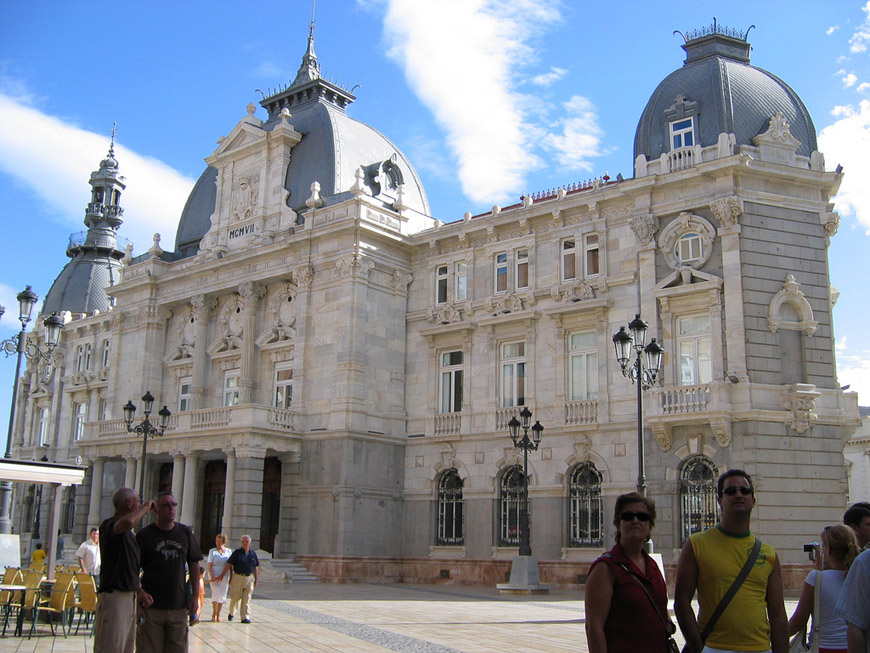
This default description comes from wikipedia
Cartagena (Spanish: [kataxena] ) is a Spanish city and a major naval station on the Mediterranean coast, south-eastern Iberia. As of January 2018, it has a population of 218,943 inhabitants. This makes Cartagena Murcia's second-largest municipality and Spain's sixth-largest city that is not a provincial-capital. The wider urban or metropolitan area of Cartagena, known as Campo de Cartagena, has a population of 409,586 inhabitants.Cartagena has been inhabited for over two millennia, being founded around 227 BC by the Carthaginian military leader Hasdrubal the Fair as Qart Hadasht (Phoenician: QRTDT; meaning "New Town"), the same name as the original city of Carthage. The city reached its peak under the Roman Empire, when it was known as Carthago Nova (New Carthage) and Carthago Spartaria, capital of the province of Carthaginensis.Much of the historical significance of Cartagena stemmed from its coveted defensive port, one of the most important in the western Mediterranean. Cartagena has been the capital of the Spanish Navy's Maritime Department of the Mediterranean since the arrival of the Spanish Bourbons in the 18th century. As far back as the 16th century it was one of the most important naval ports in Spain, together with Ferrol in the North. It is still an important naval seaport, the main military haven of Spain, and is home to a large naval shipyard.
No more updates