
Back to knowledge

UP2030 Service Platform - upscaling pilot projects

https://urbanplanningfor2030.eu/

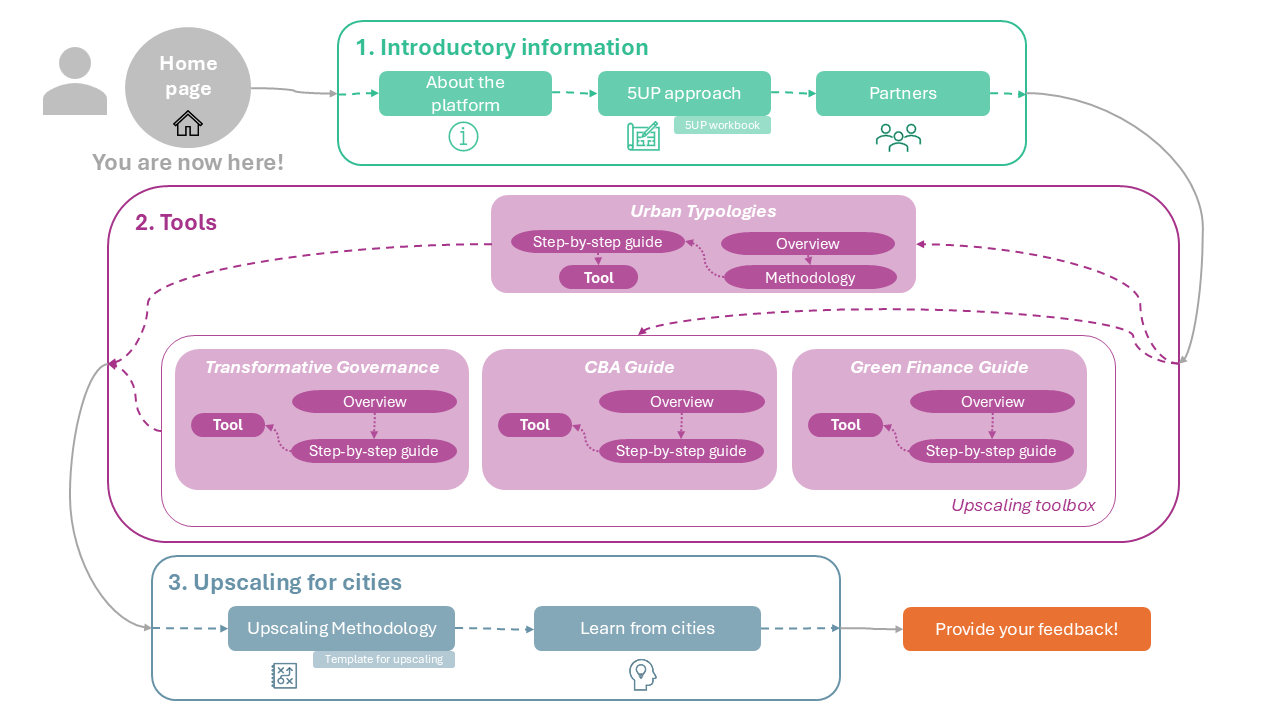
The Service Platform is an online digital hub that brings together the key resources needed by cities to take their project ideas further and address their main challenges in governance, finance and knowledge sharing, with the aim of ensuring that these project ideas can reach more people and have a wider impact.

The Platform is primarily designed for actors who have already developed a pilot project and are seeking solutions to help them upscale it, with the objective of making a greater and more lasting impact over time. For users who do not yet have a project idea, the platform also offers resources to guide them in developing one, following the 5UP methodology tested during the UP2030 project. The aim is to expand the impact and give continuity to the projects that have been developed under the frame of the 5UP methodology and the topics of climate neutrality, resilience and just transition. The Service Platform is available in the following link: https://urbanplanningfor2030.eu 


In this collection

Citizen Mapping Tool - UP2030

The Citizen Mapping Tool is an open-source map-based tool to collect data from citizens and other local actors. The tool allows for conventional types of survey questions, such as multiple choice and map-based questions, including the possibility of adding pins and drawing polygons on a map.

Citizen Voice Tool (external link)


An inclusive, web-based, and open source software platform for collaborative data collection that facilitates the citizen participation.


Engaging and understanding communities affected by urban development leads to better planning decisions and improved social outcomes. As a tool for public participation, Citizen Voice opens a channel for citizens to voice their experiences, needs, and aspirations. Citizen Voice provides the opportunity for citizen involvement from the early phase to the follow-up phase of urban development projects.

Toolkit for Stakeholder Engagement towards Carbon Neutrality - Up2030

This toolkit is designed to help cities and organisations support the socio-techncial transitions needed to achieve climate targets drawing on participatory urban planning and design. It provides a checklist covering the key stages of stakeholder engagement, from planning through to evaluation and has been developed as part of the UP2030 project.

Each item on the checklist can be expanded to reveal tools and resources relevant to that step in the process.

 > *Please note: this toolkit should be used once your initial aim has been set and communicated to your team, and it assumes that you have assessed the feasibility of the project. Stakeholder engagement should happen throughout the project, in all its stages; however, this toolkit mainly focuses on the identification of needs, barriers and drivers for change, and on co-creating shared visions.

Toolkit for Stakeholder Engagment (external link to Notion)

 

The Spatial Justice Conceptual Model: advancing the theory and application of Spatial Justice

This publication introduces the Spatial Justice Conceptual Model (SJCM) as an unpacking and a supportive application of the concept of Spatial Justice. The SJCM conceptualises Spatial Justice by defining applicable components for each justice dimension (Recognition, Procedural, and Distributive). When approached as an analytical framework, it allows for a structured and comprehensive way of assessing how aspects of spatial justice are considered in planning and design, while drawing attention to the underlying components that build each dimension.

Comments ()

Tags

Systems innovationClimate resilience
Under license CC BY-NC
This license allows reusers to distribute, remix, adapt, and build upon the material in any medium or format for noncommercial purposes only, and only so long as attribution is given to the creator.