Driving Energy Transition in Buildings with Data and Artificial Intelligence
- Featured Insights from European Mission Cities -
Why Better Buildings Data Matters?
“It is a capital mistake to theorize before one has data.”
— Sir Arthur Conan Doyle (Sherlock Holmes)
Today buildings are responsible for more than 40% of global energy-related greenhouse gas (GHG) emissions. 80% of the buildings today will exist in 2050; 6 billion people will be living in cities in 2050; ZERO GHG emissions targeted by 2050.
Data-/Artificial Intelligence (AI)-based analytics can help to achieve low carbon and at the same time quality living. Studies show,
Integration of RES and GHG Emissions Reduction. Data-driven analytics can predict building energy demand, integrate renewables, boost efficiency, and lower carbon footprints (e.g., [1][2]).
Energy and Costs saving. Data analytics solution can enable energy and cost savings (e.g., [3]).
City Energy Infrastructure Planning. Smart buildings act as nodes in a larger city energy network, aggregated data can enable grid optimization (e.g., demand-response programs), infrastructure planning, policy making.
Buildings Occupants Comfort. Smart sensors and intelligent data driven controls can adjust indoor environments (temperature, air quality, lighting) for occupant comfort. Studies show that improving thermal comfort can lead to 3–7% productivity gains in office settings (e.g., [4]).
Happiness. Analysis combining IMD Smart City Index and Happy City Index shows a positive correlation between smart city rankings and happiness rankings (though tech alone does not guarantee happiness) (e.g., [5]).
Economic and Social Impact. Investing in digital data infrastructure improves city reputation and attract investment, tech-driven businesses and talent, examples from Barcelona, Stockholm, Amsterdam (e.g., [6]).
Effective data governance is crucial for harnessing the full capabilities of AI. Challenges often arise in integrating legacy building systems with new data technologies, as such integration demands interoperability to achieve scalable and efficient urban energy solutions.
Sharing building data among stakeholders also requires trust, clear policies, and solid business cases. Nevertheless, solutions exist, such as fostering public-private partnerships to encourage trust, information exchange, innovation, and resource sharing for climate transition.
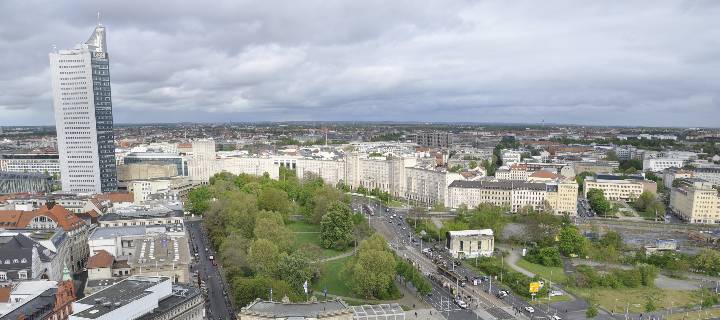
Mission cities, Leipzig, Helsinki, Rivne, Bergamo and Krakow have developed innovative and practical approaches to leveraging data and AI for the energy transition in buildings. These exemplary practices were presented during the NetZeroCities Spotlight session on Data and AI for Energy Transition in Buildings, held on November 7, 2025 (https://netzerocities.app/resource-4521) and highlighted in the following.
Reach out to us (contact: Julia.Kantorovitch@vtt.fi) and share additional examples from your cities; we’d love to feature them in future posts of this series.
Energy Map Leipzig: a decision-making tool for the energy transition
The Energy Map tool is designed to provide transparent and comprehensive information regarding Leipzig's progress in the energy transition, as well as planned initiatives within the city. Ongoing developments include the integration of a Digital Twin for evaluating renewable energy potentials and future installations. The tool facilitates the identification of renewable energy resources and displays the current expansion status of renewable energy systems across the city.
Results from the municipal heat planning initiative, Energy Transition Dashboard, E-Charging Pole Dashboard, and the Energy Map—intended as a communication tool also for citizens—will be available soon. All data is consolidated in a single location, providing all participants with access to one unified tool. This facilitates collaborative planning and the development of new ideas.
More information, https://sparcs.info/wp-content/uploads/Leipzig-Energy-Map.pdf
Helsinki Energy and Climate Atlas
Heating buildings accounts for 56% of Helsinki's GHG emissions. To reach carbon neutrality by 2035, the city must improve building energy efficiency and eliminate fossil fuel use.
The Energy and Climate Atlas is designed to promote energy efficiency and support the use of renewable energy, both of which contribute to addressing climate change. This tool consolidates a wide range of data onto one accessible platform, available on any smart device, enabling informed decision-making for a variety of users—including housing companies, municipalities, property and construction industry professionals, and businesses that provide solar panels.
Utilising city 3D models, the Tool provides comprehensive and visual information on all buildings, including energy consumption data sourced from Helsinki’s building records. Furthermore, detailed insights into the energy usage of properties owned by the City of Helsinki are available. The platform also displays the solar energy received by individual building surfaces. In addition, the Tool presents simulation results for heating energy consumption across all Helsinki buildings, associated carbon dioxide emissions, and the potential reductions achievable through renovation. It further offers a city-wide perspective on geothermal heating production opportunities via geothermal wells.
More information, https://www.hel.fi/en/news/helsinkis-energy-and-climate-atlas-provides-information-about-the-building-stock-and-the-emissions; https://kartta.hel.fi/3d/
The Intelligent Energy Management System (IEMS) Profit in Rivne
The IEMS Profit data integration and analysis platform is currently being developed to support informed decision making in the city of Rivne. Its objectives include: identifying effective energy efficiency and renewable energy initiatives; facilitating investment by preparing comprehensive data to attract infrastructure funding; forecasting and monitoring measures to reduce greenhouse gas emissions and model energy development; and delivering information support by providing citizens with accessible energy data.
The city energy efficiency center has consolidated data on energy consumption for 250 buildings. To date, 157 electricity meters (covering 82 buildings) and 115 water meters (serving 92 buildings) have been installed, with ongoing installation efforts. This infrastructure enables real-time analysis of energy consumption, facilitates prompt responses to cases of overconsumption and incidents, supports forecasting of energy and climate trends, and informs cost estimation for energy efficiency and renewable energy measures.
At present, the platform is running as a pilot in municipal buildings, with plans to expand. Demonstration pages for additional sectors are also being developed.
More information, https://netzerocities.eu/2024/04/29/rivne-a-beacon-of-sustainability-in-a-time-of-turmoil/
Data Governance and AI-analytics in Bergamo
Public and private buildings contribute to over 70% of CO₂ emissions in Bergamo. Consequently, prioritising investments in energy efficiency, the renovation of older structures, and responsible consumption practices is essential for advancing climate strategies and achieving neutrality. The ForImpact.AI platform used in Bergamo offers comprehensive data analytics capabilities, including algorithms focused on building energy efficiency, renewable energy communities (RECs), generative AI for identifying co-benefits, and AI-driven stakeholder management and governance. These tools support the City of Bergamo in planning, monitoring, predicting, and assessing their benefits, CO₂ reductions, and overall collective impact, while also facilitating scalable models that encourage active citizen participation in the transition process.
More information, https://www.forimpactai.com/casi-studios-eng/bergamo-net-zero-cities
NetZero Emission and Environmentally Sustainable Territories across across Krakow, Łódź, Rzeszów, Warsaw, and Wrocław.
In Poland, nearly 70% of 5 million single-family homes fail to meet energy efficiency standards. Collecting data for energy transition is difficult due to legal, stakeholder, and technical barriers. The NEEST initiative aims to deliver knowledge, tools, and strategies to advance energy transition and support local decarbonization investments.
The NEEST Pilot covers five building types—pre-1918 tenements, post-1945 business buildings, 1970s multi-family units, 1970s/1980s single-family homes, and 1960s/1970s schools—each with various heat sources (district heating, individual systems, gas, RES) across Krakow, Łódź, Rzeszów, Warsaw, and Wrocław.
The 3D scanning of buildings and their surroundings tested in the project enables the collection of information on building function, condition, nearby functional areas, and supports further analysis of transport, energy utilities, and green spaces.
More information, https://netzerocities.eu/polands-pilot-activity-neest-netzero-emission-and-environmentally-sustainable-territories/
References
[1] Rajaram, P. & Swathika, G. O․V. (2025). Data-driven predictive models for sustainable smart buildings, Results in Engineering, V. 27, 2025,105916, ISSN 2590-1230, https://doi.org/10.1016/j.rineng.2025.105916
[2] Zhang, Y., Koon Teoh, B., & Zhang, L. (2024). Data-driven optimization for mitigating energy consumption and GHG emissions in buildings, Environmental Impact Assessment Review, V.107, 2024,107571, ISSN 0195-9255, https://doi.org/10.1016/j.eiar.2024.107571.
[3] Rojek, I., et al. (2025). Internet of Things Applications for Energy Management in Buildings Using Artificial Intelligence—A Case Study. Energies 2025, 18, 1706. https://doi.org/10.3390/en18071706
[4] Bueno, A.M., de Paula Xavier, A.A., & Broday, E.E. (2021). Evaluating the Connection between Thermal Comfort and Productivity in Buildings: A Systematic Literature Review. Buildings 2021, 11, 244. https://doi.org/10.3390/ buildings11060244
[5] Manfreda, A. & Mijač, T. (2024). Smart City as a Mix of Technology, Sustainability and Well-Being: A Myth or Reality?. In: Sharma, S.K., Dwivedi, Y.K., Metri, B., Lal, B., Elbanna, A. (eds) Transfer, Diffusion and Adoption of Next-Generation Digital Technologies. TDIT 2023. IFIP Advances in Information and Communication Technology, vol 699. Springer, Cham. https://doi.org/10.1007/978-3-031-50204-0_5
[6] AI hubs in European cities, https://www.chooseeurope.eu/update/?id=ai-in-europe-key-trends-and-leading-cities