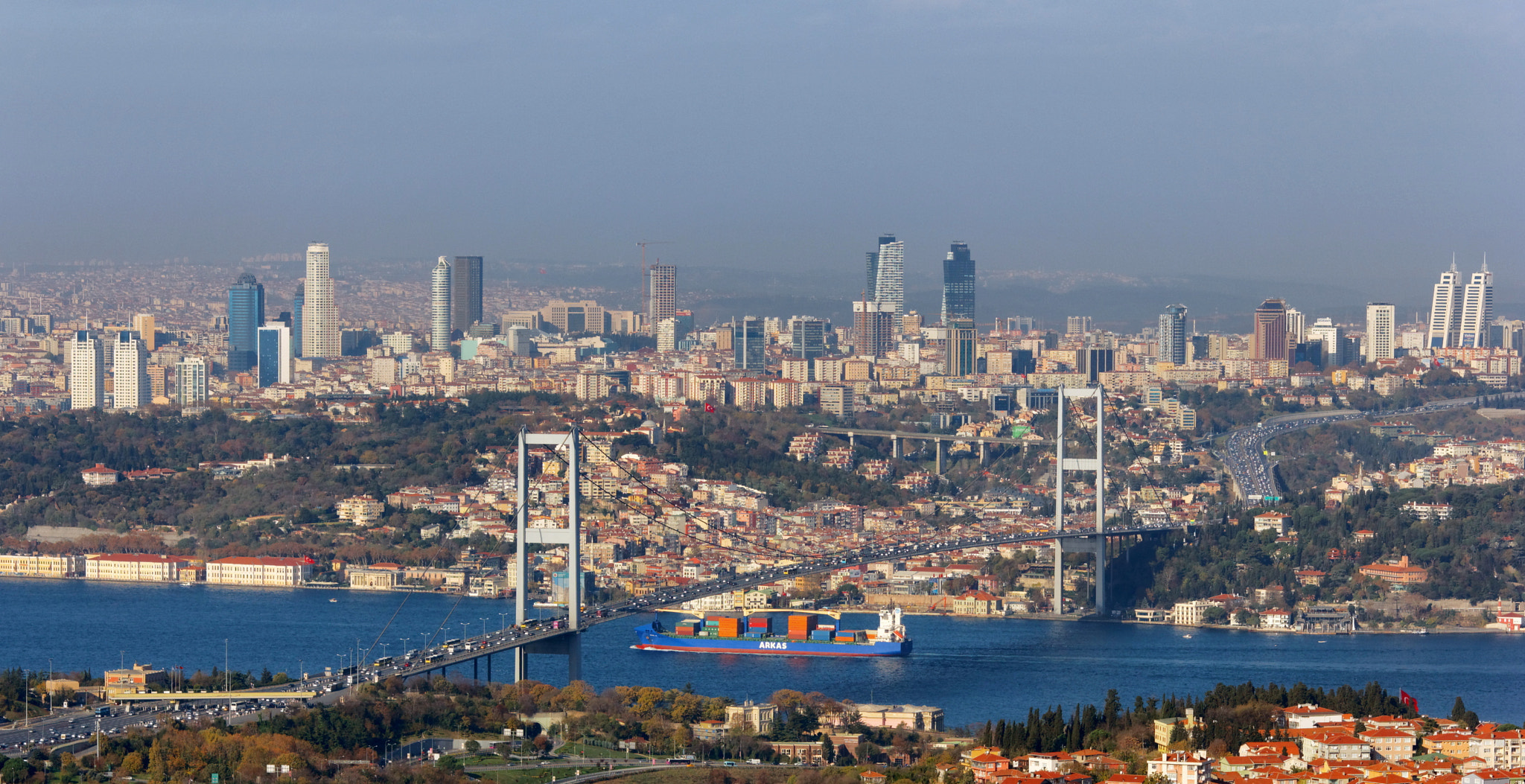
With a population exceeding 16 million, İstanbul is not only Türkiye's largest city but also the country’s economic powerhouse. The city contributes approximately 30% to the nation's GDP and is a leader in sectors such as information, finance, and professional services, while also serving as a major international trade hub. Its diverse economy encompasses various industries including textiles, metal production, machinery, and more, fostering innovation through organized industrial zones and technology development centres. The service sector is the primary employer in İstanbul, followed by industry.
İstanbul has positioned itself as a pioneering model for being a green, just and creative city.
Recognized as a global city due to its advantageous geographic position, strong economy, and diverse cultural heritage, İstanbul nonetheless faces challenges related to rapid population growth and environmental issues, which require focused attention for sustainable development. The city is already experiencing the impacts of climate change, with rising temperatures, altered precipitation patterns, and the risk of sea-level rise. These changes present significant threats to İstanbul's infrastructure, the wellbeing of its residents, and its overall sustainability.
The city’s size and population density also necessitate comprehensive planning to reduce carbon emissions, particularly in the transportation sector. To this end, the city has been working to strengthen public transport, expand metro lines, and increase the use of electric vehicles, as outlined in strategic plans like the İstanbul Sustainable Urban Mobility Plan (SUMP), and its Phase 2 Implementation Plan. In fact, in line with this commitment to sustainable transport, the İstanbul Metropolitan Municipality (IMM) is currently building 10 new metro lines simultaneously, setting a global record for metro line construction.
Recognizing the urgency of the climate crisis, the IMM has been actively developing robust strategies and policies aimed at mitigating the impacts of climate change. This includes the creation of a Climate Action Plan aligned with C40 and Paris Agreement goals. Energy efficiency is a critical component of these efforts, as the city seeks to reduce both energy consumption and carbon emissions. Initiatives include retrofitting existing buildings to improve energy efficiency, designing new buildings to meet stringent energy standards, and increasing the use of renewable energy sources like solar, wind, and biomass. The city's Sustainable Energy and Climate Action Plan (SECAP) further details these measures.
İstanbul is also taking significant steps in waste management, recognizing the challenge of sustainably managing the increasing amount of waste generated by its large population and intensive economic activities. In this regard, the collection of waste is under the responsibility of district municipalities, while IMM is responsible for its removal and disposal. IMM is developing waste management and circular economy strategies, such as the İstanbul Waste Management Plan, to address this challenge and contribute to the city's climate neutrality goals, as outlined in strategic documents like the İstanbul Zero Waste Management System Plan and the Provincial Environmental Status Report. The use of waste for biogas and compost production is an important step towards adopting circular economy principles in waste management, contributing both to waste reduction and renewable energy production.